
Smartly deploying electronic packages in today’s vehicles in a manner ensuring high performance and an ability to meet the unquenchable desire for added functionality is as complex as any other aspect of automotive design. High powered, densely packed and increasingly miniaturized components only add to the complexity. In a new paper, Laird examines this trend with a focal point on EMI noise – increasingly more of it – potentially slowing faster regulatory compliance. We explain how multiple electromagnetic interference issues, such as cavity resonance, can surface and have a cumulative impact on the performance of sensitive electronics. This paper explores all aspects of automotive device EMI and effectively resolving it.
Ensuring Optimal EMI/EMC Automotive System Performance
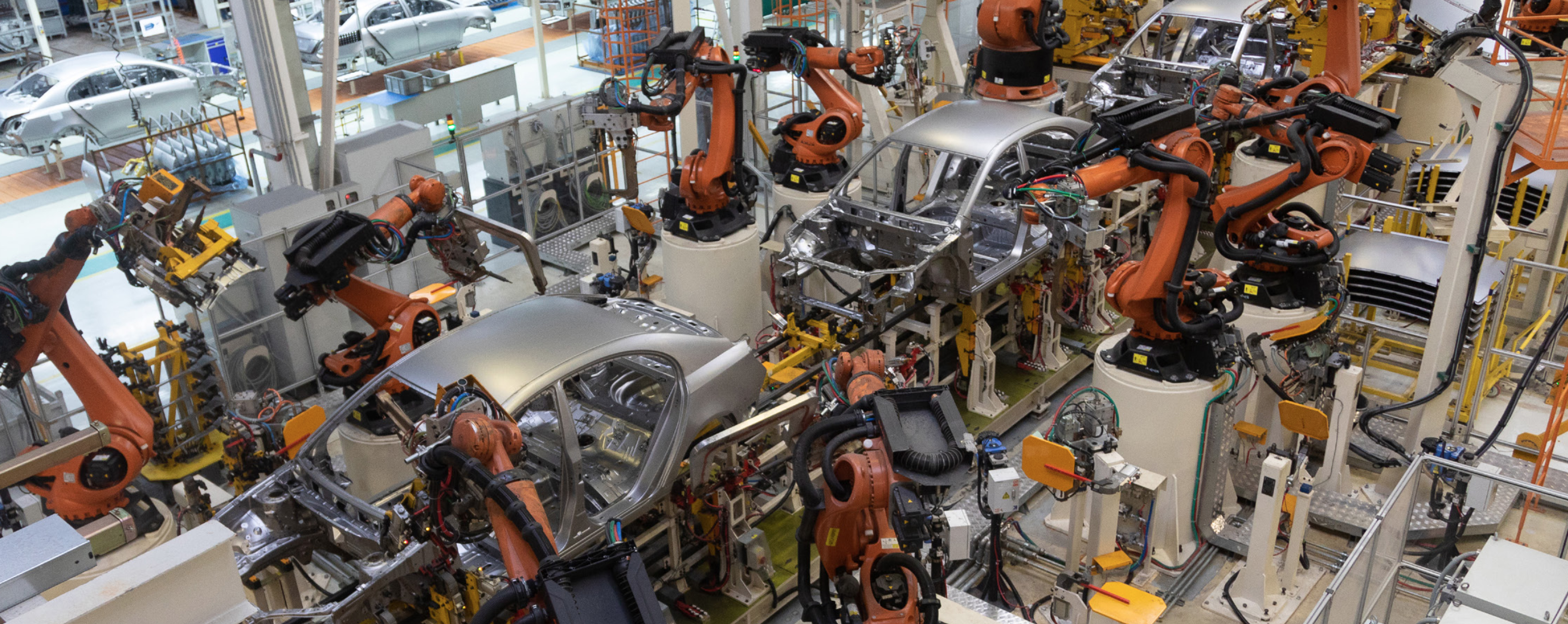
Today’s vehicles, whether driven by batteries or fossil fuels, integrate the latest electronics in their infotainment, vehicle management, and communication systems. To ensure optimal performance in such a noisy electronic environment, the latest materials and processes for EMI and RF shielding and/or absorbing and protection need to be implemented.
The continued growth in automotive electronics is placing increasing pressure on vehicle designers to properly deploy these systems in a safe, reliable, and effective way. According to Statista.com, by 2030 the electronics in a car are projected to make up around 50 percent of its value at a minimum. In order to ensure optimal subsystem performance in the electronically-noisy vehicle environment, the latest solutions for absorbing or shielding against EMI and RF interference must be employed. This is especially critical in aspects directly related to vehicle operation and safety like dynamic suspension and braking systems and ADAS (Advanced Driver Assistance Systems).
Device convergence and function integration is both helping and challenging engineers in vehicle design. Sensor fusion and advanced highly-integrated microcontrollers and chip scale packages with integrated power and wireless capabilities help cram more functionality into a given space, but require proper RF and EMI shielding in order to ensure accurate and reliable operation.
On the driver and passenger side, vehicle infotainment systems are becoming more and more complex, with high levels of functionality and system integration. Not only must these systems be protected against EMI and RF interference, any electronic noise they generate also must be prevented from impacting other subsystems in the vehicle. All these issues must be addressed while making the various solutions smaller, lighter, and more functional.
Deployment Issues
There are many factors to consider when deploying electronics in a vehicle. A modern car is a very busy RF environment, with noise sources both internal and external. Packing in more RF- and EMI-sensitive devices makes addressing this noise even more critical. Vehicle communication buses, wired and wireless, must operate seamlessly with one another amongst noise sources that include driver & passenger electronic devices and systems.
Addressing and balancing all these issues makes addressing EMI a challenge. Vehicle electronic systems are also impacted by noise from connected as well as nearby high-power switching systems. The nature of a vehicle to be moved from place to place presents the issue of having to plan for the potentially worst place it could go and the RF environment it could find there.
It is important to remember that multiple separate electromagnetic issues have a cumulative effect on sensitive electronics. For example, the combined emissions from multiple passenger devices can disrupt electronic systems. Electromagnetic emissions from internal vehicle systems and equipment must also be considered. Each item must be immune to disturbances in its environment and minimize any noise it may create in its operation as well.
Cavity resonance can also be an issue when a circuit has a lid or a cover, or when a nearby metal surface creates a cavity where resonances can form, which is an increasing problem as operating frequencies go higher. Standing waves form, affecting nearby circuitry and threatening instability in active devices. Cavity resonance can result in shielding failure which can be difficult to interpret correctly. The position of circuit elements can address the issue, as well as using conductive items to disrupt the standing wave.
System integration and optimization for EMI and RF noise involves using electromagnetic compatibility (EMC) methods that help contain EMI so that subsystems and components can work in an optimal manner even when they are in close proximity. EMC must be a consideration at every step in the design process in order to leverage every opportunity to both reduce and compensate for expected EMI and RF issues.
Reliability and safety are paramount issues in vehicles, and many countries and regions have developed standards and regulations on how automotive systems should operate, providing a baseline for the industry to follow. Regulatory compliance is therefore another aspect in addressing EMC issues. Verifying that stray EMI is within specified limits and that cars are immune to disturbances from EMI is a must in the automotive industry, and that includes infrastructure aspects like charging stations that must comply with applicable EMC standards.
Various EMC standards are defined around the globe by agencies such as the International Electrotechnical Commission (IEC) and the Institute of Electrical and Electronics Engineers (IEEE). There are national standards set by agencies like the VDE in Germany, BIS in India, the Canadian Standards Association in Canada, and the FCC in the USA. Such standards specify the conditions and rules for achieving electromagnetic compatibility, specifying emission measurement methods, emission limits, immunity testing techniques, and recommended mitigation methods, among others.
Protection Methodologies
When it comes to addressing EMI and RF noise, there are several solutions that can be applied at different places, so they can be deployed alone or leveraged against one another for greater effect. One of the first lines of defense is to use a ferrite device known by many names: ferrite bead, choke, clamp, collar, or ring. Different types of beads, like wirewound ferrite beads and chip ferrite beads, provide different responses to noise reduction. For example, wirewound ferrite beads operate over a wide range of frequencies but offer less resistance in DC circuits.
Ferrite beads can suppress noisy signals on a power supply line, and work according to Faraday’s Law. Placing a ferrite clamp around a line creates a source of inductive impedance for signals passing through it. A ferrite bead is a nonlinear component, and the impedance provided changes with the load current, voltage, and temperature. Often used with switching power supplies, ferrite filters suppress and can eliminate conducted EMI.
Gasketing and cladding are another EMC methodology, providing a physical barrier to stray EMI and RF. Such shielding goes far beyond simple rubber gaskets, sheets, and fillers, which only provide basic environmental protection and are not suited for electronic systems. Composed of a homogeneous mixture of conductive particles in elastomers, such gaskets and fillers have excellent electrical properties, and can also offer environmental protection and noise abatement if properly constructed and applied correctly.
Depending on the nature of the challenge, conductive solutions can be deployed as sheets, ribbons, and cords, as well as in stamped or molded parts custom-produced to application needs. For example, they can be deployed as board-level shielding as cladding in addition to gasketing openings in the packaging. These shielding materials may have a hybrid layered structure of different materials, like fabric over foam, to offer the best of EMI and RF shielding as well as physical protection. Other solutions include highly-compliant foam gaskets using a metalized polyimide film outer covering for conductivity.
Multi-functional Solutions (MFS) address both EMI and thermal challenges, while providing physical protection for systems from vehicle harsh environments. Hybrid and metal ISE (Integrated Solutions Engineered) solutions merge thermal, EMI shielding, and microwave absorbers into a single engineered package. For example, hybrid EMI absorber and thermal gap pad materials reduce the radiation of EMI noise as well as providing a thermal path for heat to escape. They can also address EMI compliance and thermal management issues that originate from a specific board, acting as a board-level shield, without the tooling investment.
Board Level Shielding (BLS) protects systems at the component level, and are usually available in both one- and twopiece designs. A one-piece shield offers six sides of EMI protection, with the sixth side being the board itself. Onepiece designs offer economical shielding protection where access to covered components is not necessary. Two-piece shields enable the inspection or repair of shielded components without having to remove the entire shield. There are no tooling costs associated with single- or two-piece standard designs.
One way to deal with cavity resonance problems is to use microwave-absorbing solutions in various form factors – elastomers, foams, dispensed, molded, etc. Magnetically-loaded elastomers are often used, as they are nonconductive and will not short the protected circuit. Dielectrically-loaded materials can also safeguard circuit boards when deployed properly from cavity resonances. Some microwave absorbers use resonant materials manufactured to absorb at multiple frequencies.
Choosing a solution
When it comes to settling on a solution set, it is important to consider several important aspects of the design, development, and deployment cycle. One should consider the needs of the application and the desired performance characteristics of each potential solution. Once that has been determined, or even in conjunction with the first step, regulatory and standards compliance must be considered. Even the best solution is useless if it cannot be deployed in the target market.
This is where having a good development partner can help a great deal. Most experienced solution providers have a strong grasp of not only the solutions available to address your application, they also can help you address the regulatory issues of the target market as well as potential supply-chain issues that may be involved in the creation and/or procurement of any given solution.
The increased amount of electronics in modern vehicles and the complexity of the systems involved demand the best EMI and RF noise and interference mitigation methods and products. Having a good development partner is a strong force-multiplier in creating optimal solutions for EMI and RF noise and interference mitigation. Knowing the nature and value of the potential solutions available to address your needs is important to design success.
About Laird Performance Materials (Laird)
Laird Performance Materials, integrated into DuPont Electronics & Industrial’s Interconnect Solutions (ICS) business, solves signal integrity and power transmission issues. We enable high-performance electronics by creating protection solutions for advanced interconnects and systems. World-leading technology brands rely on Laird for improved protection and helping accelerate their products’ time-to-market. A global brand, Laird solves design issues by providing Laird™ branded innovative products such as EMI suppression or absorption materials, thermal interface materials, structural and precision metals, magnetic ceramic products, and multi-functional solutions (MFS). The Laird™ MFS product family solves multiple EMI, thermal and structural design issues simultaneously using a single process design. Visit Laird at https://www.laird.com.
Copyright © 2022, Laird Technologies, Inc. DuPont™, Laird™, Laird Performance Materials™, and corresponding logos, are trademarks owned by Laird Technologies, Inc., DuPont de Nemours, Inc., or their subsidiaries. All rights reserved.